Electrical Engineering & Electronics Patents
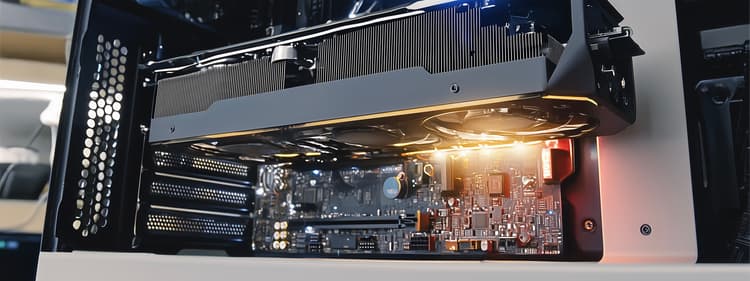
Baxter IP offers specialist patent attorney services for innovations in electrical engineering, electronics, electromechanical systems, and related high-tech fields. Our patent attorneys possess deep technical expertise in circuits, signals, power systems, control theory, communications, and semiconductor technologies, enabling us to draft precise, strategically focused claims that provide broad, enforceable protection while addressing the rapid pace of innovation and intense competition in this sector.
Key Benefits of Patent Protection in Electrical Engineering & Electronics
- Market Exclusivity — Secure strong rights to prevent competitors from making, using, selling, or importing your novel electronic devices, circuits, systems, methods, or software-implemented inventions in Australia and priority international markets.
- Commercial Leverage — High-quality patents facilitate licensing revenue (as demonstrated by CSIRO's Wi-Fi royalties), joint ventures, investment attraction, defensive positioning, and enforcement against infringement in fast-moving tech and manufacturing landscapes.
- Strategic Deterrence — Claims directed to core technical advancements make it difficult for competitors to replicate functionality through minor modifications, alternative implementations, or workarounds, protecting your innovations throughout product lifecycles.
Common Challenges and Our Solutions
Electrical and electronics inventions often face hurdles including:
- Proving inventive step amid crowded prior art in heavily patented fields like semiconductors, communications, signal processing, and control systems.
- Ensuring sufficient support and enablement for broad claims covering variations in components, architectures, algorithms, materials, or operating conditions.
- Managing disclosure risks in a sector with long development cycles involving third-party designers, prototypes, and collaborations.
We tackle these through:
- Early & Iterative Filing — Advising on provisional applications before any public disclosure or third-party discussions, with follow-on filings to capture evolving designs, new embodiments, or improvements during hardware/software development.
- Invention Identification & Portfolio Building — Working closely to spot multiple distinct inventions within complex systems, building layered patent families that cover combinations, methods, apparatus, and improvements.
- Competitor-Targeted Claim Strategy — Drafting claims focused on essential technical features, performance advantages, or architectures that competitors must use to achieve comparable results, delivering clear infringement evidence and reduced design-around vulnerability.
- Technical Depth & Precision — Attorneys with relevant engineering backgrounds accurately describe circuit designs, signal flows, power management, electromagnetic interactions, firmware/hardware interfaces, and functional equivalences.
- Multi-Layered IP Strategy — Combining standard patents, innovation patents (where applicable), registered designs for layouts/aesthetics, copyright for software/firmware, and trade marks to maximise protection across functional, incremental, and visual elements.
- Global Optimisation — Preparing specifications and claims tailored for key jurisdictions (Australia, USA, China, Europe, Japan, Korea, Taiwan), balancing enforcement strength, costs, manufacturing hubs, and major consumer markets.
Relevant Industry Experience at Baxter IP
Our team has extensive experience across electrical engineering and electronics subsectors, including:
- Computer hardware and networking
- Control systems and automation
- Fixed and wireless communications
- Electronic transaction terminals and payment systems
- Electric motors and power systems
- Electro-mechanical devices
- Environmental, process, and sensor technologies
- Machine learning and artificial intelligence applications
- Navigation, location services, and augmented reality
- Robotics and process automation
- Semiconductor devices and fabrication
- Signal processing and audio/video technologies
- Human-computer interaction
- Communications protocols and telecommunications
- High-efficiency power generation and storage
Attorneys such as Chris Baxter, Dr Qi Zhang, Martin Earley, Vivek Dahiya, and others regularly handle electrical, electronics, electromechanical, and high-tech patent matters for startups, SMEs, ASX-listed companies, research institutions, and independent inventors.
We provide commercially oriented, strategically drafted patent protection that transforms electrical and electronics innovations into valuable, revenue-generating assets—enabling bold innovation while delivering sustained competitive advantage in domestic and global markets.
Contact our Sydney or Melbourne team for a confidential discussion on protecting your electrical engineering or electronics invention.
Electrical Engineering IP in Action:
Questions from Hardware Founders
Hardware startups face unique IP challenges from design through manufacturing. Here are answers to questions we hear from electrical engineering founders.
Some of our electrical engineering and electronics clients include: