
Physics & Optical Engineering Patents
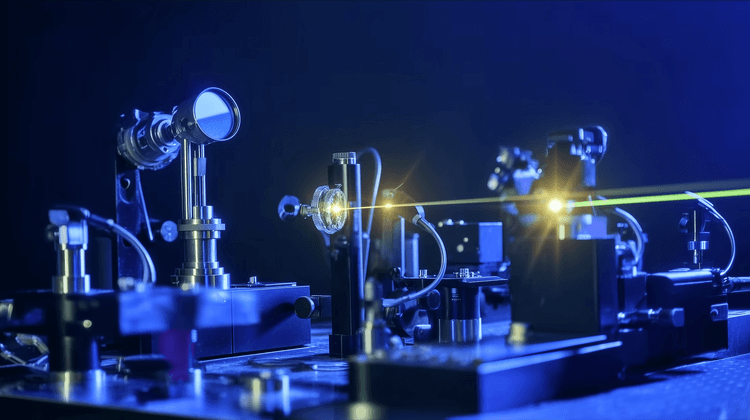
Baxter IP provides specialist patent attorney services for innovations in physics, optical engineering, photonics, optoelectronics, quantum technologies, and related advanced scientific fields. Our patent attorneys hold strong technical backgrounds in physics and optics, enabling precise translation of complex fundamental principles into commercially valuable, enforceable patent assets that protect practical applications and technological breakthroughs.
Key Benefits of Patent Protection in Physics & Optical Engineering
- Market Exclusivity — Obtain robust rights to prevent competitors from making, using, selling, or importing your novel physics-based devices, optical systems, methods, or quantum-enabled technologies in Australia and priority global markets.
- Commercial Leverage — High-quality patents support licensing revenue, spin-out ventures, university-industry collaborations, investment attraction, and defensive strategies in highly innovative and competitive sectors.
- Strategic Deterrence — Claims crafted around core technical implementations and performance advantages make it difficult for competitors to replicate real-world solutions through alternative approaches or minor variations, safeguarding your edge in emerging fields like quantum computing, advanced sensing, and photonics.
Common Challenges and Our Solutions
Physics and optical inventions often encounter unique hurdles, including:
- Distinguishing patentable practical applications from unpatentable fundamental principles of physics (e.g., laws like E=mc2 are not patentable in isolation, but their engineered implementations in reactors, scanners, detectors, lasers, or optical fibres are).
- Establishing inventive step in crowded prior art landscapes, particularly in mature fields like optics/lasers and rapidly evolving areas like quantum mechanics.
- Managing disclosure risks from academic publication requirements, conference presentations, or collaborative research, which can forfeit patent rights if not addressed early.
- Supporting broad claims that encompass variations in materials, wavelengths, configurations, quantum states, or operating environments without invalidation risks.
We address these through:
- Early & Provisional Filing Strategy — Advising on provisional applications before any public disclosure (papers, talks, or collaborations) to secure priority and preserve rights amid concurrent global research efforts.
- Application-Focused Claim Drafting — Emphasising practical, real-world problem-solving implementations and technical features that deliver measurable advantages, ensuring claims target patentable subject matter while maximising scope and infringement clarity.
- Technical Precision & Depth — Attorneys with physics and optics expertise accurately describe phenomena (e.g., wave-particle duality, quantum entanglement, photon interactions, non-linear optics), experimental setups, simulation models, and functional interrelationships.
- Robust Specification Preparation — Incorporating detailed embodiments, alternative configurations, performance data, theoretical underpinnings, and experimental results to provide strong support for broad yet defensible claims.
- Multi-Layered & Global IP Optimisation — Combining patents with registered designs (for optical layouts or device aesthetics), trade marks, and trade secrets where appropriate; tailoring specifications and claims for major jurisdictions (Australia, USA, Europe, Japan, Korea, China) to align with research hubs, manufacturing, and commercial markets.
Relevant Industry Experience at Baxter IP
Our team has extensive involvement across physics and optical engineering subsectors, including:
- Photonics, optoelectronics, and laser systems
- Optical fibres, lenses, and imaging technologies
- Quantum computing, quantum sensing, and quantum information
- Nuclear and particle physics applications (e.g., detectors, reactors)
- Medical physics devices (e.g., imaging, radiotherapy, diagnostics)
- Display systems and LED/OLED technologies
- Spectroscopy, sensors, and metrology instruments
- Advanced materials with optical or quantum properties
- High-precision measurement and environmental monitoring
Attorneys such as Chris Baxter, Dr Qi Zhang, Martin Earley, Vivek Dahiya, and others regularly handle physics, optical, quantum, and related high-tech patent matters for universities, research institutions, spin-outs (including local quantum leaders), ASX-listed companies, SMEs, and independent inventors.
We deliver commercially oriented, strategically drafted patent protection that converts fundamental physics and optical innovations into defensible, revenue-generating assets—enabling groundbreaking research to achieve real-world impact and sustained competitive advantage in domestic and international markets.
Contact our Sydney or Melbourne team for a confidential discussion on protecting your physics or optical engineering invention.
Physics & Optics IP in Action:
Questions from Deep Tech Founders
Deep tech companies commercialising physics and optical innovations face unique patentability challenges. Here are answers to questions we hear from founders and researchers.
Some of our physics and optical engineering clients include: