
Patent Oppositions in Australia: Expert Guidance from Baxter IP
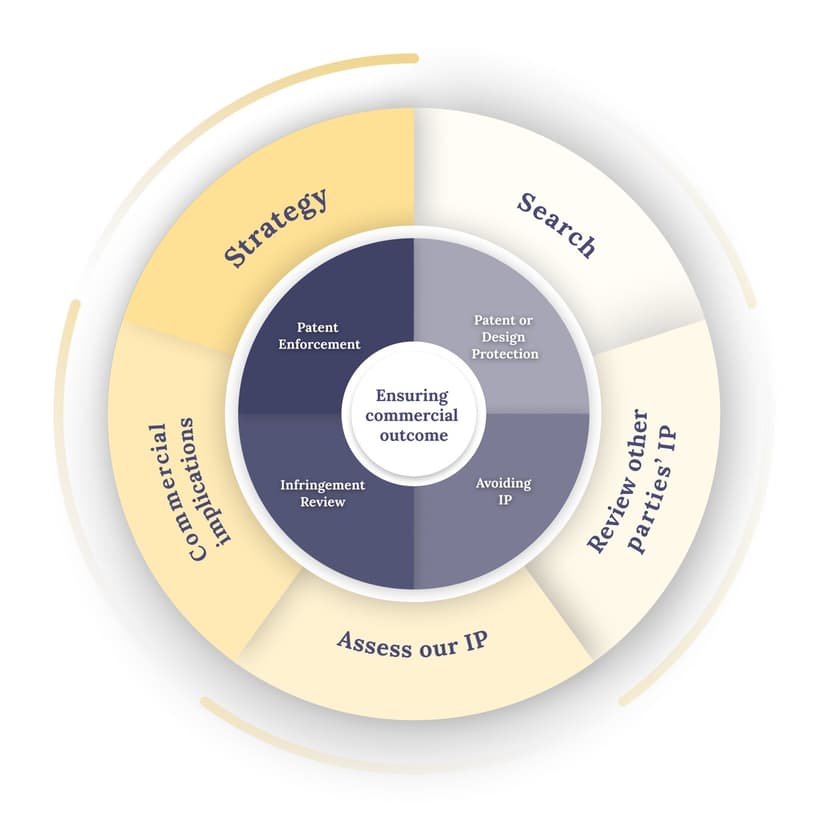
Challenging a patent application through opposition proceedings in Australia can be a strategic way to prevent invalid intellectual property rights from being granted, protecting your commercial interests without the high costs of court litigation. At Baxter IP we specialize in handling patent oppositions before IP Australia. As a boutique, mid-sized IP firm and one of the leading non-publicly listed firms in Australia, we offer flexible, commercially astute advice on opposition matters, including validity analyses, evidence preparation, and strategic filings.
With a proven track record in contentious proceedings—handling 39 such matters in FY24—our award-winning team has successfully managed oppositions across sectors like engineering, medical devices, electronics, and ICT. Director Martin Earley, with over 30 years of experience including as a Patent Examiner and Opposition Hearings Assistant at IP Australia, provides unparalleled knowledge of Patent Office practices. Dr. Qi Zhang, our Principal leading the Electrical & ICT team, brings international expertise in patent disputes. Whether you're opposing a competitor's application or defending your own, Baxter IP positions you for success while minimizing risks.
Understanding Patent Oppositions in Australia
A patent opposition is an adversarial mechanism under the Patents Act 1990 (Cth) allowing any third party—such as a competitor, supplier, or customer—to challenge the grant of a standard patent before IP Australia, rather than in court. This process acts as a finer sieve than initial examination, enabling scrutiny of prior art or other issues that may not have been apparent to the Examiner. It also provides an opportunity to determine the IP position, outside of normal court rules, to provide insights into the benefits and risks of litigation or attempting commercial resolution.
The examination of patents is a broad sieve to eliminate invalid patents being granted but cannot work perfectly regardless of how thorough a search is conducted, as not all prior art is readily available to the Examiner. Through the patent opposition system, a finer review is possible as the opposition Hearing Officer can be made aware of information that may not have been readily available to the Examiner or can be directed to other prior art information from around the world that was not found during the examination process. Furthermore, arguments and evidence can be set out as to the common general knowledge of a person skilled in the art at the priority date of the patent.
For standard patents, opposition can be filed within three months of acceptance advertisement in the Australian Official Journal of Patents. If successful, it can lead to refusal of grant, amendments, or revocation, avoiding costly post-grant litigation.
Grounds for Patent Opposition
The grant of a patent may be opposed on several grounds, with the most common being lack of novelty, inventive step, lack of support or entitlement. Grounds include:
- The nominated person is not entitled to the patent (e.g., under section 33(1), or entitled only jointly).
- The invention is not a manner of manufacture.
- Lack of novelty or inventive step compared to prior art.
- The claims are not supported by the specification as filed.
- Secret use of the invention before the priority date by the patentee or authorized parties.
Ownership disputes can be raised anytime before grant, not limited to the opposition window. Other objections may target amendments, extensions of time, pharmaceutical term extensions, or licensing decisions.
The Patent Opposition Process: From Filing to Decision
Acceptance of a Patent Application
A patent application undergoes examination where objections may be raised. If none are raised or they are addressed, the application is accepted and advertised. Without opposition within three months, the patent grants upon fee payment, lasting 20 years (up to 25 for pharmaceuticals) with renewals.
Stages in an Opposition Proceeding
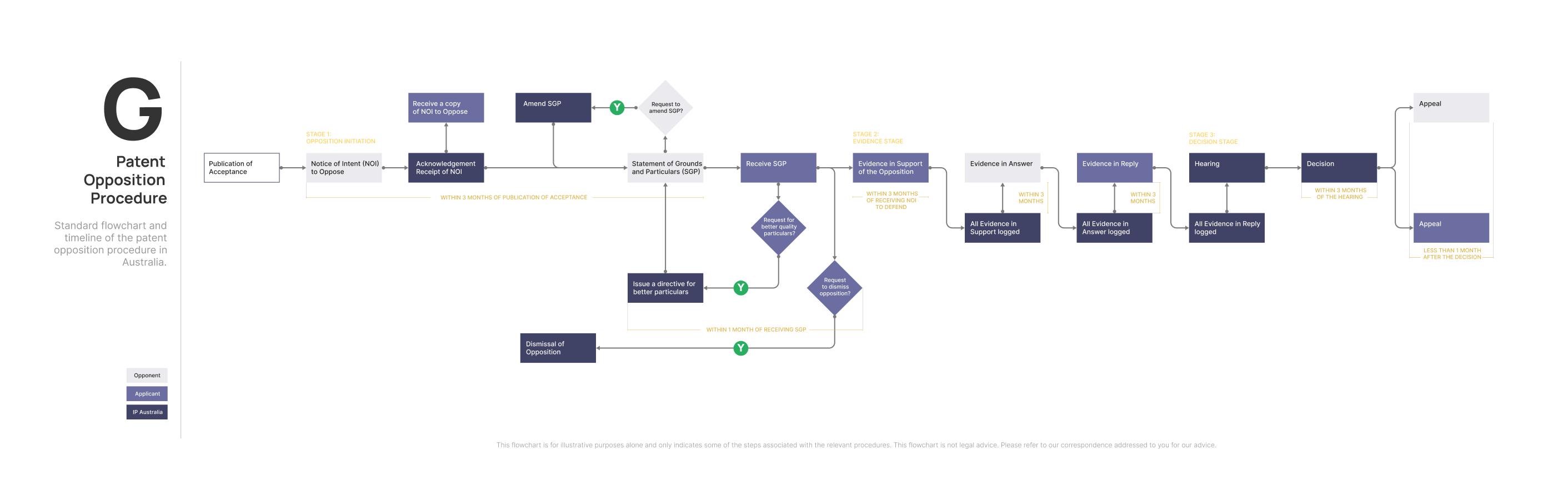
Opposition involves structured stages for fairness and efficiency:
Opposition Initiated (Stage 1):
- File a Notice of Intention to Oppose within three months of acceptance advertisement.
- Submit a Statement of Grounds and Particulars within three months, detailing bases and supporting documents.
Evidence Stage (Stage 2):
- Evidence in Support: Opponent files within three months, via statutory declarations from experts.
- Evidence in Answer: Applicant responds within three months.
- Evidence in Reply: Opponent rebuts within two months, limited to new issues from the answer.
Evidence is filed electronically and shared securely via Objective Connect.
Hearing and Decision (Stage 3):
- A hearing (oral or written submissions) is scheduled. Submissions are due 10 days before for opponents, five for applicants.
- The Delegate decides within three months, notifying parties. If successful, the applicant may amend; if unsuccessful, the patent proceeds to grant.
- Appeals to the Federal Court or Administrative Appeals Tribunal are possible within 21-28 days.
The whole process requires forward planning, as evidence must align with initial grounds, and submissions present legal arguments—not substitute for evidence.
Costs in Patent Oppositions
Administrative fees apply for filing notices, with substantial additional costs for evidence preparation and experts. The overall investment depends on how far the opposition runs and how it is contested – the main cost drivers are:
- Stage 1: lodging the notice of opposition and preparing the statement of grounds and particulars.
- Stage 2: the evidence rounds – evidence in support, in answer and in reply, including any expert declarations.
- Stage 3: the hearing, with cost depending on factors such as whether a Barrister is briefed.
We provide a fixed cost estimate for each stage before it commences, so you can decide stage-by-stage whether continuing serves your commercial goals.
The successful party may receive a costs award per Patent Regulations Schedule 8, though these rarely cover actual expenses. We conduct cost-benefit analyses to ensure alignment with commercial goals.
Other Actions Alongside Opposition Proceedings
- Section 27 Notice: This allows evidence to be submitted challenging novelty/inventive step from public inspection to three months post-acceptance, for Examiner consideration.
- Re-examination Request: This can be made at any time during a patent's term, and can be used to challenge a patent on novelty, inventive step, or clarity grounds, with supporting documents.
- Filing a Divisional Application: This can be filed to maintain an application in the family pending and therefore continued prosecution irrespective of the outcome of the opposition.
Strategy Prior to Patent Opposition
Before filing, a strategic evaluation will consider:
- Commercial objectives sought.
- Technical arguments on patentability.
- Need for searches, validity opinions, barrister input, or expert evidence.
- Likelihood of success and costs.
- Alternative mechanisms for resolution.
Baxter IP will look at business contexts, markets, and competitors to align strategies with goals, sometimes favoring negotiation over opposition.
Commercial Strategy Alongside or Instead of Patent Opposition
Opposition paths must support business aims. We assess if opposition achieves coexistence, freedom to operate or provide another advantage. Negotiation with demonstrated strength, or assessing commercial impacts on distributors, often proves effective.
Baxter IP's Approach to Patent Oppositions and Disputes
At Baxter IP, we handle oppositions from initial assessment to resolution, focusing on commercial outcomes. Our approach includes:
- Initial assessment of IP rights, validity issues, and implications.
- Strategy development for opposition, defense, or settlement.
- Evidence gathering, including prior art searches and obtaining expert opinions from persons skilled in the art.
- Formal proceedings, with ongoing management and communication.
Examples of patent opposition matters we have handled include:
- Dynamic Suspensions Pty Ltd v Elizabeth Anne Molnar [2021] APO 8
- Pacific Enterprises (Aust) Pty Ltd v ASSA ABLOY Australia Pty Limited [2014] APO 81
- ASSA ABLOY Australia Pty Ltd v Pacific Enterprises (Aust) Pty Ltd [2013] APO 58.
We provide comprehensive services, understanding each opposition's uniqueness.
Why Choose Baxter IP for Your Patent Opposition Needs?
In competitive markets, oppositions demand expertise. Our 2,000+ clients, including BYD, UNSW, UAM and startups, trust our seven-attorney team for results. As a non-listed firm, we deliver large-firm systems at mid-tier rates with capped fees during most aspects of the patent opposition process. We filter opposition learnings into stronger applications.


.png&w=48&q=75)